

Preserve the archive.
Preserve retained historical materials and older studies as flat, dated links, with documented exception treatment. Full remediation and full-text search of this older archive are outside the defined scope.
PREPARED FOR THE WAY WEST COUNTY MOVES
A focused website rebuild that makes WCCTC’s transportation information easier to use and gives staff control of what comes next.
Prepared for West Contra Costa Transportation Commission
September 2026 · Proposal for review
01THE RECOMMENDATION
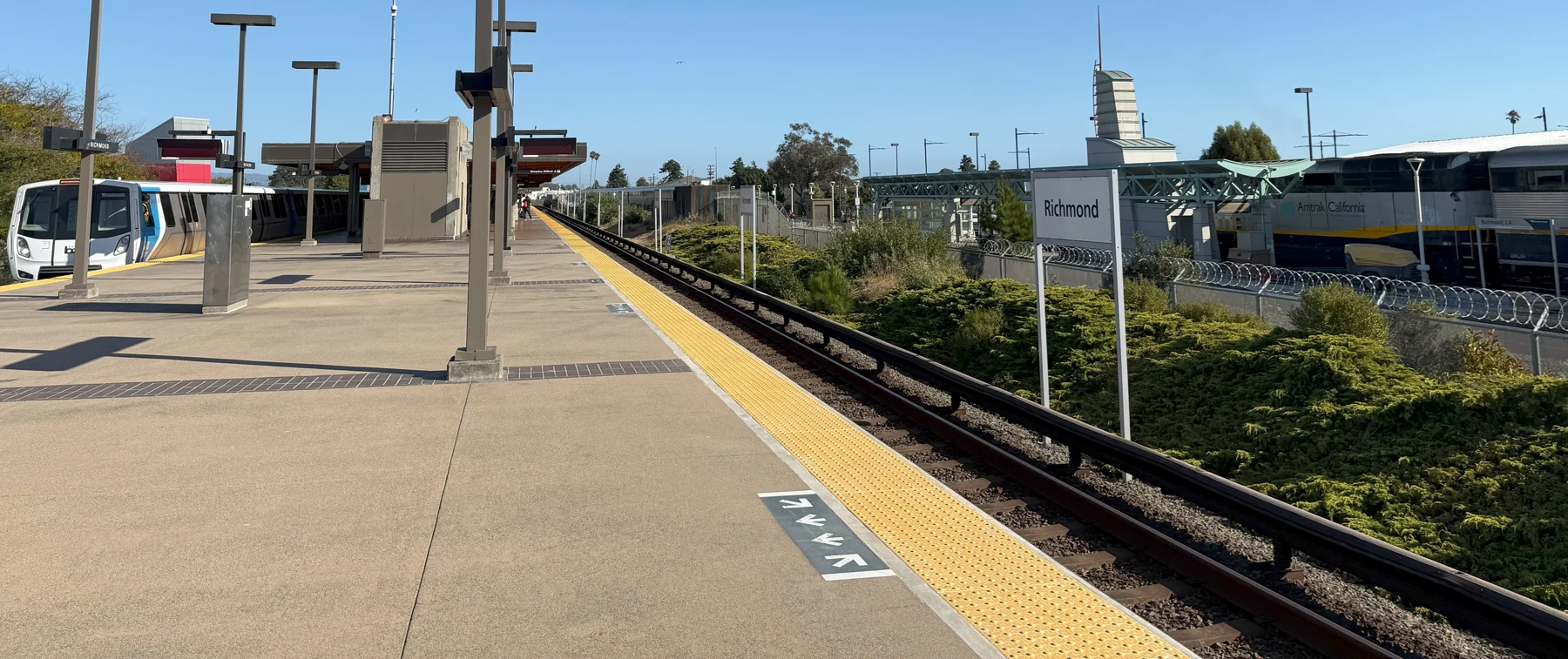
WCCTC coordinates transportation planning, funding and programs across five cities, the county and three transit operators. Its website needs to make that work understandable, and its public records dependable to find.
We recommend carrying this React experience into production with Payload, an established open-source CMS, behind the public pages. Preserve WCCTC’s identity and the reusable layouts already developed, then focus the remaining effort on accessible content and an editing routine a small staff can maintain.
The September 11 clarification gives this project a defined starting point: WCCTC’s content audit and navigation are already complete. We can begin with that inventory and move directly into validation, adaptation and migration.
September 11 Q&A, especially 3, 7 and 21Meeting details and documents in one understandable record.
A routine for future agendas and full packets, supported by reusable templates.
Routine page and navigation changes without paid vendor involvement.

REVIEW BY RFP CRITERION
Choose what matters to your review. Weights are from RFP Section 9, not a score awarded to this proposal.
Retain the developed React experience and integrate Payload’s established CMS starter. Use a defined library of page blocks, structured meeting fields and a dated archive, with real staff publishing after award.
Review platform decisions ↗Approve representative home, meeting, document and form patterns before extending the system.
02WORKING PROOF
These are functioning journeys in the concept, with a clear boundary between what you can use now and what the awarded project will deliver.
Choose a task below and follow it through the working concept.
Explore a journeyDate, meeting body, status and documents belong together. The concept distinguishes scheduled, past and cancelled meetings, then connects people to the official source.
Explore meetings & recordsTry this journey
Selected real records demonstrate discovery. Complete archive migration and PDF remediation remain production work.
03CONTENT, PLATFORM & ACCESSIBILITY
Meetings, plans, programs and utility pages need different structures. The seven approved sections provide the frame; reusable page templates and CMS blocks provide the consistency.
At kickoff, match every retained page and document to a destination, content type and treatment. Confirm the form inventory, legacy URLs and source files with staff. Use the supplied 2025 accessibility scan to focus manual and assistive-technology checks on navigation, meetings, documents and forms.
Use Payload’s established website starter and administration features as the production foundation, integrating the reviewed React components. This is an alternative to the theme-led approach described in RFP Section 4: reuse completed interface work, keep a defined template family and avoid building a CMS from scratch. The current concept does not yet connect to Payload or establish production or PDF conformance.
Preserve retained historical materials and older studies as flat, dated links, with documented exception treatment. Full remediation and full-text search of this older archive are outside the defined scope.
Structure date, time, location, status and documents. Remediate the identified agendas. Full packets from this period remain outside the remediation set.
Use accessible source templates and a checked posting workflow for both agendas and full packets, including approved procedural translations.
Base remediation: approximately 42–52 documents, comprising seven substantial standalone documents and 35–45 recent agendas. The agency’s finalized list controls. Q&A 7–11
Production acceptance targets WCAG 2.1 AA for the defined scope, as required by the RFP. Check keyboard operation, focus, screen-reader output, headings, labels, contrast, reflow and the reading order and tags of in-scope documents.
Use WCAG 2.2 AA design criteria for this proposal’s controls, target sizes and focus behavior. Neither a successful build nor an automated scan is a conformance certification.
Use browser-based translation for general content. Professionally translate the fixed procedural text for future meeting notices once, then reuse the approved text. Confirm languages and approval responsibility with WCCTC.
Recommend client-controlled managed hosting for the React application, Payload CMS, database and file storage, with staging and backups. Document the provider, dependencies, operating costs and restore procedure before launch.
THE PROPOSED FOUNDATION
React for the public website. Payload CMS for staff-managed pages, navigation, meeting records and documents. The production recommendation preserves the reviewed design.
Inspect the proposed CMS ↗Integrate the existing components with an established CMS starter and a defined family of templates. Payload supplies the administration foundation; the project configures WCCTC’s content and publishing needs. This CMS is proposed, not connected to the current concept.
Configure editing for copy, images, navigation, documents and meeting records. Staff can create pages and assemble layouts from supplied blocks. A genuinely new component or data structure requires development, which a qualified replacement firm can perform from the handed-over source.
Q&A 21 permits a platform other than WordPress. Section 4 still favors lean delivery. Our alternative relies on reusing the developed interface and established CMS functionality, with integration, accessibility testing and handoff included in the proposed scope. No theme or CMS label substitutes for release testing.
04REQUIREMENT TO RESPONSE
Each entry connects a requirement to the response, evidence and dependency. “Production deliverable” describes work after award, not a completed feature of this concept.
20 of 20 requirement groups
Use the 2025 scan, then check key templates with keyboard and assistive technology. Deliver findings ranked by severity and effort.
Dependency: WCCTC provides current-site access and the supplied scan.
Review the testing approachIntegrate the reviewed React layouts with Payload’s website starter and CMS. Explain this alternative to the theme-led scope through interface reuse, a defined template set and the fixed budget.
Dependency: CMS integration, template accessibility testing and staff approval remain production work.
Explore the visual conceptOrganize About Us, Meetings, Plans and Studies, Programs, STMP, Funding, and Opportunities around public tasks.
Dependency: The final subpage inventory governs production migration.
Explore the navigationReconcile retained pages, documents, source files and destinations at kickoff. Do not repeat the agency’s pruning exercise.
Dependency: The finalized list is supplied at notice to proceed.
Review the content ledgerTreat seven substantial documents and approximately 35–45 individual agendas, about 42–52 documents total.
Dependency: Source files and the agency’s final remediation list.
Review the document boundariesMake 2025–2026 meetings searchable by date, time, location, status and attached documents. Remediate agendas, not full packets from that period.
Dependency: The concept contains selected records; production covers the retained set.
Try the records and document browserMigrate retained 2014–2024 materials and older studies as dated links, with a documented accessibility exception process.
Dependency: Archived material is not represented as fully remediated or fully searchable.
Review the archive approachFrom launch, use accessible source templates and a checked posting routine for both future agendas and full packets.
Dependency: The sample checks a workflow, not PDF conformance or CMS publishing.
Try the posting rehearsalPublish simple tabular information as structured web content where feasible, reducing unnecessary document downloads.
Dependency: WCCTC confirms which retained documents can become HTML pages.
Inspect the fee tableTest redirects for retained pages and documents. Retired content can return a proper not-found response.
Dependency: Current URL export and final keep/archive/retire decisions.
Review launch acceptanceProvide search across retained webpages. PDF full-text indexing is an optional enhancement, not a base requirement.
Dependency: The concept indexes its public pages; PDF contents are excluded.
Test site searchConfirm the form inventory and approved Facebook and Bluesky destinations with staff before production integration.
Dependency: Concept inquiries send nothing; production recipients and delivery must be verified.
Try a local inquiry draftUse browser-based general translation and a one-time professional translation of reusable future-meeting procedural text.
Dependency: WCCTC confirms languages and approves the procedural text. No archive-wide translation promise.
Inspect language assistanceConfigure staff editing for pages, navigation, meeting records and reusable blocks. Staff can assemble new layouts from the supplied blocks; genuinely new component behavior or data schemas still require development.
Dependency: No custom approval system or production CMS is implied by the React concept.
Review the staff workflowInclude hosting configuration in the base fee. Recommend client-controlled managed application hosting, database and media storage, with staging, backups and a documented restore process.
Dependency: WCCTC approves the provider and actual recurring fees separately.
Review recurring-cost treatmentCombine automated screening, manual checks and document review; record fixes, retests and exceptions for the defined scope.
Dependency: WCCTC accepts the consultant’s report. No independent audit or current certification is claimed.
Review acceptance evidenceInclude one proposed 90-minute remote training session, a short maintenance guide and an accessible-posting checklist.
Dependency: Staff participate in the rehearsal and sign off. Two design review rounds are proposed.
Review the staff checkpointsAddress minor launch issues and questions arising from training within the base fee. Later support is separate.
Dependency: Optional Section 4.5 services require separately approved scope and pricing.
Review stabilization datesThe formal offer must identify two genuine comparable website/accessibility engagements, a live accessibility-focused sample and the assigned expertise.
Dependency: Reference consent, comparable scope, dates, named expertise and team availability remain to be confirmed.
Review related work and evidence statusProvide the 5–8 page narrative, excluded supporting documents, itemized costs, a signed 90-day-valid cover letter and agreement statement.
Dependency: The base fee and The Design Factory applicant presentation are approved. Ari Raphiel is the principal contact. Confirm signature authority, contracting identity, agreement/insurance documentation and any exceptions.
Review submission statusControlling sources: corrected RFP and September 11 Q&A, including Appendices A and B. Qualifications and signed-offer requirements remain explicitly open.
05SCOPE & INVESTMENT
$21,600
One responsible consultant.
The complete Sections 4.1–4.4 scope.
Four weeks of stabilization included.
Within WCCTC’s $22,000 ceiling. The proposed implementation reuses the developed interface, an established CMS starter and WCCTC’s completed inventory. A defined set of templates keeps the remaining work focused on CMS integration, accessibility and migration.
See the delivery planDefined retained-content migration; template integration and CMS configuration; targeted document remediation; webpage search; inventoried forms and social links; retained-content redirects; testing, hosting setup, training and handoff.
Two consolidated design reviews and one 90-minute remote staff training session are proposed.
Recurring hosting and approved licenses are paid separately by WCCTC. The provider, renewal terms and actual cost are documented before approval. Hosting setup is included in the base.
PDF full-text indexing and Section 4.5 support beyond stabilization are optional, separately scoped services.
The standard agreement provides for monthly invoices for completed services, payment within 30 days of a compliant invoice, and the final 10% within 60 days after satisfactory completion and final invoicing. The proposed base fee is $21,600. The signed offer and agreement documentation remain to be completed.
Material scope changes require a written impact statement and approval before work begins. Any requested travel or new paid service needs prior written approval. See Appendix B, Sections 2.1–2.4.
06DELIVERY & REVIEW POINTS
Assuming the RFP’s October 30, 2026 notice to proceed, the proposed February 19 launch leaves four weeks for stabilization through March 19, ahead of WCCTC’s April 26 milestone.
NOVEMBER 2026
Reconcile the supplied inventory, verify the baseline and configure the CMS starter. Review representative page and record patterns.
Staff checkpoint: approve the content ledger and consolidated design direction.
DECEMBER–JANUARY
Configure the CMS, migrate retained content, remediate the defined documents and prepare the archive and redirects.
Staff input: source documents, approved copy and procedural translations.
BY FEBRUARY 19
Test templates, documents and journeys. Rehearse publishing, deliver the report and guide, and complete an approved cutover.
Staff checkpoint: accept the defined release and confirm launch readiness.
FEBRUARY 19–MARCH 19
Address minor launch issues and training questions, confirm access and document remaining maintenance responsibilities.
Staff checkpoint: close stabilization and confirm ownership of accounts and exports.
Staff sign-off is sufficient under Q&A 4. The schedule depends on access, available source files, translation approval and timely consolidated feedback. Confirm the working calendar at kickoff.
07TEAM & RELEVANT EVIDENCE
The Design Factory’s proposed delivery model keeps design and implementation under an accountable lead. Ari Raphiel is the proposed principal contact; Sederrick Raphiel provides proposed creative review and asset direction.
Any specialist responsible for document remediation or accessibility testing must be named and their capacity confirmed in the formal offer. TDF remains responsible for the complete deliverable.
 THE DESIGN
Thoughtful design.
Accountable delivery.
Proposed project lead and principal contact for The Design Factory. Coordinates day-to-day decisions, delivery and implementation.
ari@thedesignfactory.comProposed creative review and asset direction. Keeps typography, imagery and WCCTC’s identity consistent through the reviewed templates.
Meet The Design Factory
NONPROFIT / PUBLIC & STAFF EXPERIENCES
Related work includes website design and development and continued support for public and staff experiences. It connects programs, membership, events and organizational information.
Relevance to WCCTC: structuring varied public tasks and the staff workflows behind them.
Explore the live website
MEMBER ASSOCIATION / TIME-SENSITIVE CONTENT
Related work includes website updates, improvements to training pages and job-posting presentation.
Relevance to WCCTC: making recurring information easier to find and maintain.
Explore the live websiteReference status: These are related portfolio examples, not substitutes for the two required comparable website and accessibility-focused references. Completion dates, exact accessibility scope, client consent, the live accessibility-focused sample and assigned expertise must be verified before the signed offer. No WCAG certification or quantified outcome is claimed.
08ACCEPTANCE, OWNERSHIP & RISK
WCCTC should be able to maintain the site and select another qualified provider later. Client-controlled accounts, reusable CMS blocks and a documented release make that practical.
A completed content ledger and tested legacy URL map, including the dated archive.
A consultant conformance report tied to the tested templates and document set, with fixes, retests and documented exceptions.
A publishing rehearsal covering meeting fields, documents, approved procedural text, corrections and search.
Client accounts, source, database and media exports, dependency/license records, maintenance guidance and a restore procedure.
Reconcile the agency’s list at kickoff, identify missing editable files early, and assign a resolution before affected migration work starts.
Use consolidated staff feedback and agreed checkpoints. Record the effect of any material change before approving additional work.
Use staging, a pre-cutover backup, tested redirects and a documented recovery procedure. Confirm who owns updates and backups at handoff.
Keep production forms limited to necessary information. Agree measurement and retention with WCCTC; do not make an analytics dashboard or an unrequested integration a condition of using the website.
09THE NEXT STEP

An established platform. A defined document strategy. Clear public journeys. A practical staff handoff.
Explore the working tasks, review the scope and discuss the recommendation with Ari. The signed formal response will remain the procurement record; this page makes the proposed experience and delivery plan easier to inspect.
Review version, not a signed offer. The base fee and applicant presentation are approved. Ari Raphiel is the principal contact; the final cover must carry an authorized signature. References, assigned expertise, team availability and agreement/insurance documentation must be finalized before submission. No proposal has been sent through this page.